
Counterterrorism2026
Counterterrorism2026
Monday, April 20, 2026 9:00 AM - Tuesday, April 21, 2026 4:00 PM (EDT)
Description
Building on the success of last year’s inaugural program, we are proud to host COUNTERTERRORISM2026 — now expanded to two full days in response to overwhelming demand and the rapidly evolving threat environment.
This mission-focused convening brings together leaders from government, law enforcement, academia, and the private sector to examine the current state of terrorism and the complex landscape shaping tomorrow’s risks.
As threats continue to evolve in speed, scale, and sophistication, this year’s expanded program will provide deeper operational insight and strategic analysis into:
- Emerging terrorist organizations and global networks
- Shifting tactics, tradecraft, and technology adoption
- Target selection trends and critical infrastructure risks
- Domestic radicalization dynamics
- Cross-border and transnational threat linkages
- The role of innovation, AI, and digital platforms in extremist operations
Designed for practitioners and decision-makers, the Summit moves beyond theory to explore real-world case studies, intelligence assessments, and frontline lessons learned.
Agenda:
8:00 – 9:00 AM Registration & Networking
9:00 – 9:20 AM Welcome: The 2026 Global Threat Picture
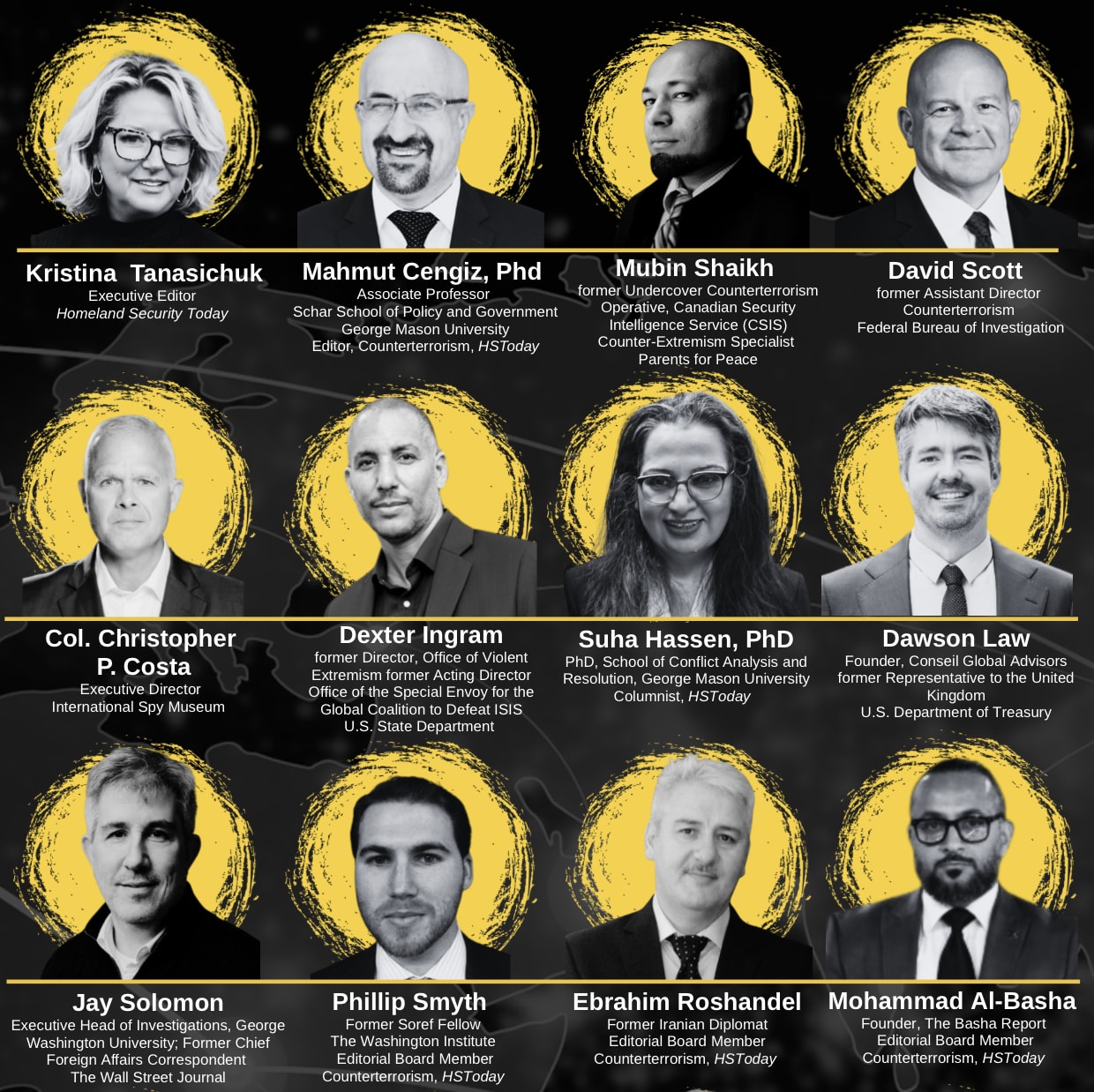
Kristina Tanasichuk, Executive Editor, Homeland Security Today
Dr. Mahmut Cengiz, Managing Editor, Counterterrorism Vertical, Homeland Security Today; Research Associate Professor, Schar School of Policy and Government, George Mason University
9:20 – 9:50 AM Opening Keynote: Trends and Terrorism Forecasts
Mark Dargis, Operations Director, National Security Branch, Federal Bureau of Investigation
9:50 – 10:50 AM Iran’s Proxy Warfare & Escalation Dynamics
Nawar Shora, JD, Author, Muslims, Arabs, and Arab-Americans: A Quick Guide to Islamic and Arabic Cultures
Jay Solomon, Executive Head of Investigations, George Washington University; Former Chief Foreign Affairs Correspondent, The Wall Street Journal
Phillip Smyth, Former Soref Fellow, The Washington Institute; Editorial Board Member, Counterterrorism, Homeland Security Today
Mohammed Al-Basha, Founder, The Basha Report; Editorial Board Member, Counterterrorism, Homeland Security Today
Ebrahim Roshandel, Former Iranian Diplomat; Editorial Board Member, Counterterrorism, Homeland Security Today
K. Campbell, Principal, Blue Glacier Security & Intelligence
10: 50 AM – 11:00 AM Break
11:00 AM – 12:00 PM The Global Salafi-Jihadist Ecosystem
Moderator: Daniel Eizenga, Research Fellow, Africa Center for Strategic Studies, National Defense University
Tricia Bacon PhD, Professor, Justice, Law, Criminology, and Security, American University; Director, American University’s Open Source Intelligence & Analysis Hub (AURORA)
Jeff Parsons, Senior Research Fellow, George Washington University; Former Special Agent, FBI
Pearl Matibe, Foreign Policy & Security Analyst, Global Terrorism Trends and Analysis Center
Mohamed Abdurahman, Journalist and East Africa Analyst
Key Takeaways:
Al-Qaeda network resilience
Islamic State affiliates & external plotting
Sahel and Afghanistan threat vectors
Leadership decapitation: still effective?
12:00 – 1:00 PM Lunch
1:00 – 2:00 PM Terrorist Financing
Dawson Law, Founder, Conseil Global Advisors; former Representative to the United Kingdom U.S. Department of Treasury
Ari Redbord, former Senior Advisor to the Deputy Secretary & Undersecretary for Terrorism and Financial Intelligence, U.S. Treasury
Matthew Levitt, Fromer-Wexler Senior Fellow; Director, Jeanette and Eli Reinhard Program on Counterterrorism and Intelligence, The Washington Institute
Key Takeaways:
Crypto and decentralized finance
Sanctions evasion models
Hawala and informal networks
Terrorist designations & cartel implications
Financial intelligence coordination
2:00 – 2:20 PM The Era of the Agentic Analyst- Leveraging AI Agents to Accelerate Intelligence Analysis
Martin So, Co-Founder, Pantoptica Tech
2:20 – 3:20 PM Mexico: Cartels as Terror/Transnational Threats
Peter Reuter, Professor, School of Public Policy & Department of Criminology, University of Maryland
Evan Ellis, Senior Associate (Non-resident), Americas Program, Center for Strategic & International Studies
Jake Braun, Executive Director, Cyber Policy Initiative, Harris School of Public Policy, University of Chicago; Author, Fentanyl; CEO, Cambridge Global Advisors; former Acting Principal Deputy National Cyber Director, the White House; former Senior Counselor to the Secretary, U.S. Department of Homeland Security
Key Takeaways:
Rationale and diplomatic impact of cartel terrorist designations
Legal and enforcement consequences (prosecutions, sanctions)
Cartel violence and terror-style tactics
Effects on regional stability and trafficking networks
U.S.–Mexico counterterrorism coordination challenges
3:20 – 4:20 PM Current Trends in Radicalization
Dexter Ingram, Former Director, Office of Violent Extremism; Former Acting Director, Office of the Special Envoy for the Global Coalition to Defeat ISIS, U.S. Department of State; Editorial Board Member, Counterterrorism, Homeland Security Today
Mubin Shaikh, former Undercover Counterterrorism Operative, Canadian Security Intelligence Service (CSIS); Editor-at-Large, Intervention, Homeland Security Today
Rick Shaw, Pre-Incident Prevention Specialist/Coach; Author, The First Preventers Playbook; Creator of The First Preventers Framework
Captain Matthew Turner, Active-Duty Army Physician, Emergency Medicine, Penn State Milton S. Hershey Hospital
Key Takeaways:
Digital recruitment ecosystems
Algorithmic amplification
AI-generated propaganda
Cross-ideological grievance narratives
Counter-messaging frameworks
Join us at Salt Line for Happy Hour Afterwards! 
April 21: Domestic Threats, Radicalization & Emerging Capabilities
8:00 – 9:00 AM: Registration and Networking
9:00 – 9:15 AM: Welcome
Kristina Tanasichuk, Executive Editor, Homeland Security Today
Dr. Mahmut Cengiz, Managing Editor, Counterterrorism Vertical, Homeland Security Today; Research Associate Professor, Schar School of Policy and Government, George Mason University
9:15 – 10:15 AM The U.S. Domestic Threat Landscape
Jonathan Lewis, Research Fellow, Program on Extremism, George Washington University
Aurora Ortega, PhD candidate, Public Policy Program, George Mason University
Brandon W. Graham, CBRN Unit, Metro Transit Police Department (MTPD) Washington Metropolitan Area Transit Authority (WMATA)
David A. Tyree, Director of Financial Crimes Strategy, DataWalk; Former Senior Investigator, Drug and Enforcement Agency
Key Takeaways:
Right-wing accelerationism
764
Left-wing violent extremism
Lone actor mobilization
Domestic financing streams
10:15 AM – 10:30 Break
10:30– 11:30 AM Protecting Critical Infrastructure in a Multi-Domain Threat Environment
Moderator: Kelly Murray, Co-Founder, Center for Cross Sector Coordination; former Associate Director for Chemical Security, Cybersecurity and Infrastructure Security Agency
Dennis Alexander, Independent Researcher and Homeland Security Contributor
Tina Barton, Co-Chair, Committee for Safe and Secure Elections
Brett T. Walkenhorst, Chief Technology Officer, Bastille Networks
Joshua Sinai, PhD, Professor of Practice, Intelligence & Global Security Studies, Capitol Technology University
Kawika Lau, Keynote Speaker & Former Senior Instructor, Federal Law Enforcement Training Center (FLETC) Leadership Institute
Key Takeaways:
Integrating behavioral, financial, and digital indicators for early threat detection
Disrupting and preventing attackers before operationalization
Election security under pressure: protecting critical election infrastructure
Wireless as an attack surface: vulnerabilities in trusted environments
Data exploitation and gaps in current security models
Applying a security risk management framework to assess effectiveness in government counterterrorism campaigns
11:30 – 12:15 PM Narratives & Strategic Influence
Nikki Rutman, Managing Partner, Global Intelligence & Investigations, Sentinel
Claire Moravec, Director, Intelligence Operations for Social Media Exploitation, Sentinel; Editorial Board Member, Counterterrorism, Homeland Security Today
Dr. Suha Hassen, Adjunct Faculty, American Public University System; Editorial Board Member, Counterterrorism Homeland Security Today
12:15 – 1:30 PM Networking Lunch
1:30 – 2:30 PM Cyber & AI in the Terrorism Battlespace
Moderator: Dr. Scott J. White, Program Director, Cybersecurity Bachelor of Professional Studies; Associate Professor, George Washington University
Dr. Tamara Schwartz, Associate Professor of Cybersecurity and Strategy, York College of Pennsylvania; Affiliate Researcher, Massachusetts Institute of Technology Sloan Interdisciplinary Consortium for Improving Critical Infrastructure Cybersecurity, U.S. Air Force (ret)
Key Takeaways:
Encrypted platforms
Deepfakes and disinformation
Critical infrastructure targeting
AI-enabled counterterrorism analytics
2:30 – 3:30 PM U.S. Counterterrorism Strategy & Mega-Event Security
Moderator: Kristin Kelly Shapiro, Former SES, Counterterrorism Division, FBI; Associate Director, Defense and Security, Guidehouse; Editorial Board Member, Counterterrorism, HSToday
Col. Chris Costa, Executive Director, International Spy Museum; former Special Assistant to the President & Senior Director for Counterterrorism, National Security Council, 2017-18
Dave Scott, former Assistant Director, Counterterrorism, Federal Bureau of Investigation
Key Takeaways
Over-the-horizon counterterrorism and strategic competition
Threat prioritization across key regions
Intelligence integration and interagency coordination
Securing the FIFA World Cup and the Summer Olympics
Counter-drone and emerging technology mitigation
Protection of soft targets and mass gatherings
3:30 – 3:55 PM Closing Remarks
Kristina Tanasichuk, Executive Editor, Homeland Security Today
Dr. Mahmut Cengiz, Managing Editor, Counterterrorism Vertical, Homeland Security Today; Research Associate Professor, Schar School of Policy and Government, George Mason University


Welcoming Presentations:
🟡 AI-Enabled Hybrid Threats and the Cognitive Dimension of Cyberterrorism: Implications for Homeland Security
By: Tamara Schwartz & Robert Thomson, York College of Pennsylvania, Carnegie Mellon University & Cognitive Security Institute
🟡 Applying a Security Risk Management Framework to Assess Effectiveness in Governments Counterterrorism Campaigns
By: Joshua Sinai, PhD, Professor of Practice, Intelligence & Global Security Studies, Capitol Technology University
🟡 Detection vs. Reality: Can We Detect the Threat in Time? Operational Realities of CBRN Detection in Urban Areas
By: Brandon Graham, CBRN Unit, Metro Transit Police Department (MTPD), Washington Metropolitan Area Transit Authority (WMATA)
🟡 Election Security Under Pressure: How to Protect Critical Election Infrastructure from Emerging Threat
By: Tina Barton, Co-Chair, Committee for Safe and Secure Elections
🟡 Hezbollah’s Inconspicuous Threat in the Western Hemisphere
By: Aurora Ortega, PhD Candidate, Public Policy Program, George Mason University
🟡 OSINT and the Digital Pathways of Radicalization and Recruitment
By: Claire Moravec, Director, Intelligence Operations for Social Media Exploitation, Sentinel & Nikki Rutman, Managing Partner, Global Intelligence, Sentinel
Audience
COUNTERTERRORISM 2026 welcomes contributions relevant to:
- Federal, state, and local counterterrorism and homeland security professionals
- Law enforcement and intelligence community practitioners
- Academic researchers in security studies, political science, computer science, and related fields
- Policy makers, analysts, and private sector partners engaged in security technologies and risk management
4121 Wilson Blvd Suite 200
Arlington, VA 22203 United States